Hip Hop Dose Staff
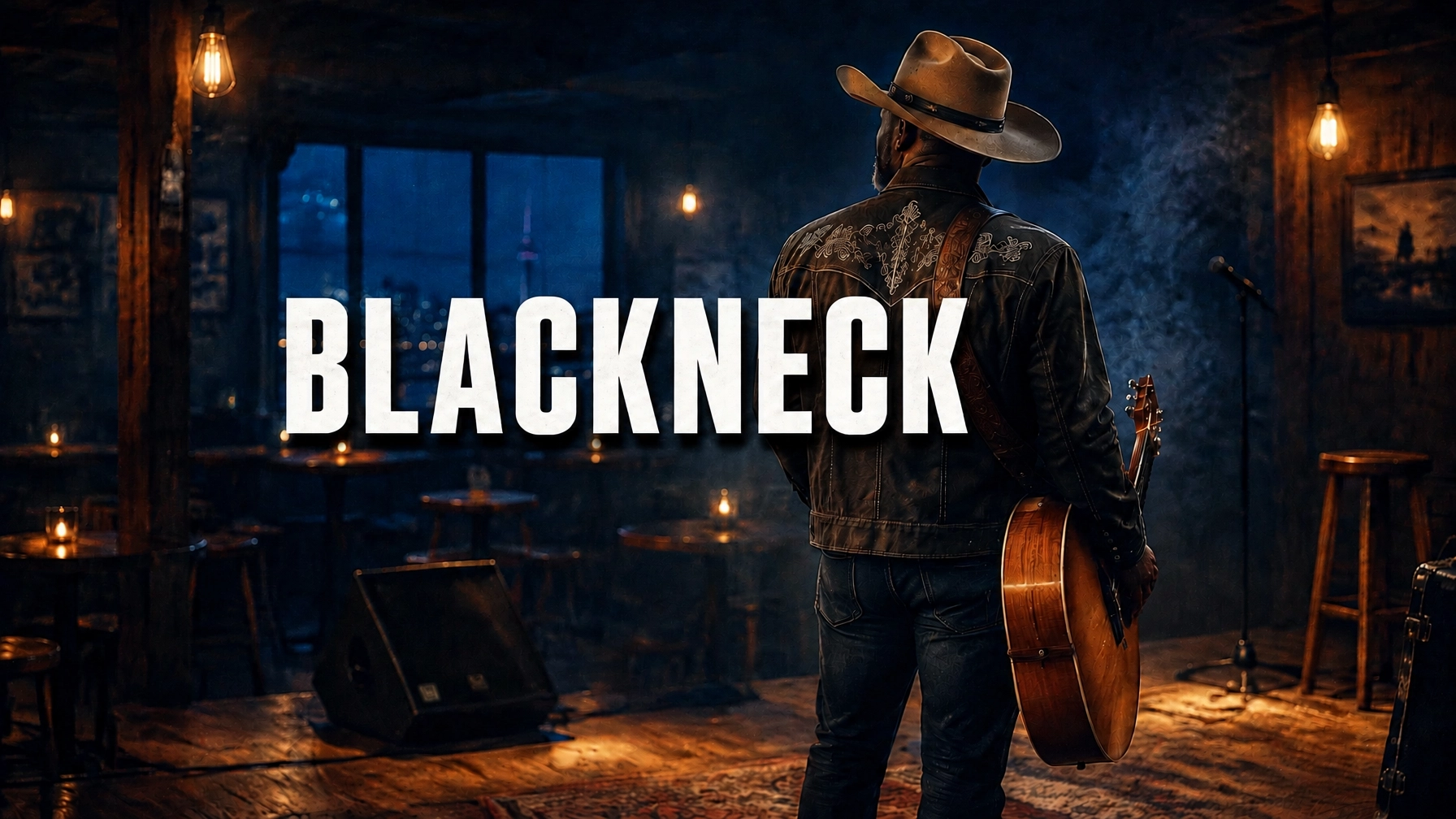
k-os has released BLackneck, his first studio album in 11 years, with Drake financing the independent project and serving as executive producer. The seven-track record arrived October 30 through k-os’s Spiritual Tech Records, with distribution via The Orchard.
The financial backing gave k-os room to pursue an ambitious production, including string orchestras, a children’s choir and sessions with musicians such as producer Bob Rock. But the album’s release is not simply a story of Drake stepping in. It is also a return to recording for an artist whose genre-blending approach helped shape Canadian hip-hop in the early 2000s.
In an October 31 Canadian Press interview at Toronto’s Horseshoe Tavern, k-os described Drake’s contribution as both support and a wager on what he might make with the resources. “Sometimes when you lend somebody money, you don’t always do it in a charitable way,” he said. “Sometimes you just wanna see what they’re gonna do.”
He called it “an experiment,” adding that he was glad to put the funding toward music with the potential to make an impact. The description captures a tension built into the album’s origin: the investment enabled creative freedom, but it also came with the expectation that the bet would produce something worth hearing.
A long-running connection
The two artists first met in 2009, when Drake was starting to find his footing in the music business. k-os recalled offering advice on navigating the Canadian industry. They later reconnected by chance at a Toronto bar during the pandemic, exchanged numbers and resumed contact by text.
Drake asked to hear k-os’s new material. After listening, he told him, “Wow, this is amazing. Clearly you’re still good at this,” according to k-os. Drake encouraged him to make a quintessential k-os record and offered to bankroll the work.
The relationship also includes shared music and touring history. The artists toured the United States together and recorded “Faith” parts one and two. Drake has acknowledged k-os’s influence on him and on Canadian hip-hop more broadly. On BLackneck, Drake is credited as executive producer, while Matte Babel of DreamCrew managed the project.
After hearing the finished album, k-os said, Drake “loved it,” recalling a text response that included profanity and surprise. The executive producer credit reflects a meaningful role in getting the project made, though the record remains k-os’s own: an independently released album shaped around his ideas and arrangements.
Staying close to his roots
The title BLackneck plays on “redneck,” referencing k-os’s upbringing in Whitby, Ontario. In the Canadian Press interview, he said the title was about staying true to where he came from rather than changing himself to fit music-industry expectations.
That grounding extended to the recording process. Much of the album was made at his parents’ farm near Whitby, including sessions inside a 1984 camper van. k-os had moved from Toronto to Vancouver, a change he said helped him step outside the expectations attached to his earlier success.
“Sometimes when you’re known, you feel like you have to continue on from where you last left off,” he said. “But if you move away, you can kind of start new.”
That distance suited an artist who has often preferred the freedom of the outsider position. At 54, k-os said he likes that people forget him because it gives him the chance to begin again. He described the music’s drive as connected to a kind of punk-rock angst: the feeling of being unknown.
On “Still Number One,” the album’s opening track, that underdog perspective becomes a critique of artists who focus on holding onto status at the expense of making something new. “You’re always going to make the best music from being an underdog,” he said.
Seven tracks, wide-ranging sounds
The album draws on the mix of hip-hop, rock, country and soul that has long been part of k-os’s approach. Its opening track, “Still Number One,” pairs a forceful vocal with a string section and children’s choir. “i would never.” was produced by Bob Rock, whose credits include work with Metallica and Mötley Crüe.
The project’s scale was part of the point. “I did a record that I couldn’t make in my basement,” k-os said. He also described time as essential to the process: space to experiment, test arrangements and follow ideas beyond the limits of a basic home recording setup.
The album’s seven tracks are “Still Number One,” “OK Corral,” “EUREKA!,” “Golden Touch,” “i would never.,” “Guns&Roses” and “Hootenanny.” Together, they return to the anything-goes sensibility that marked his early work, rather than attempting to recreate one particular era or sound.
That sensibility was apparent from the beginning of k-os’s career. His 2002 debut, Exit, introduced a distinctive blend of introspective rap, melodic vocals and acoustic guitar. The 2004 album Joyful Rebellion brought wider recognition through radio hits including “Crabbuckit” and “Man I Used to Be.” A multi-Juno winner, k-os emerged as an alternative to the bling-heavy hip-hop then dominating the mainstream, moving between singing and rapping without treating the styles as separate lanes.
That musical flexibility helped expand the possibilities for Canadian hip-hop artists, including Drake. But k-os has said he is wary of being recognized as an influence if it dulls the frustration that can motivate his work. For BLackneck, his focus was less on legacy than on making a record that could surprise listeners.
“People should be perplexed,” he said. “When they hear good music, it’s like seeing a good movie. It’s like, what was that? I’m doing it for that first listen, to transport people somewhere else.”
Attention is not the same as reach
Drake’s role has made BLackneck an unusually visible release for an independent veteran album. It also puts a spotlight on a broader financing problem k-os described in the interview: major labels are increasingly reluctant to spend hundreds of thousands of dollars on a single record when music arrives in such volume.
That reluctance is part of what made Drake’s investment consequential. Yet the funding and executive producer credit do not determine how far the album will travel. BLackneck is an independently released project without the label push that can support a major commercial campaign, and its performance in a crowded market remains an open question. Drake’s involvement guarantees attention, not results.
For k-os, the immediate achievement is the chance to make a record on a scale he says would not have been possible in his basement. The album’s release also brings his return into focus after more than a decade without a studio album. Whether it finds a broad audience or a smaller one, BLackneck is built around the same instinct that shaped his earliest work: following an idea across genre lines, and resisting the pressure to become something else.